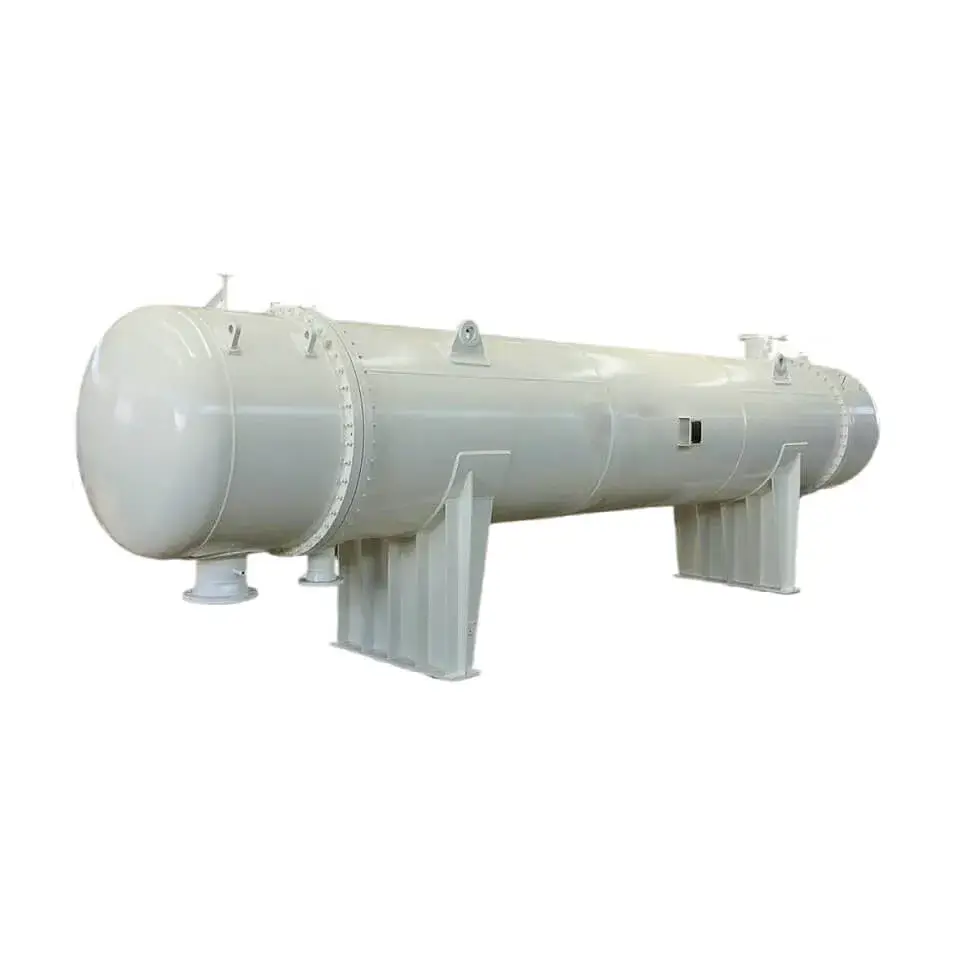
Heat Exchanger

Main Parameters
Fete Vessel's professional guide to understanding and maintaining shell & tube heat exchangers for industrial applications.
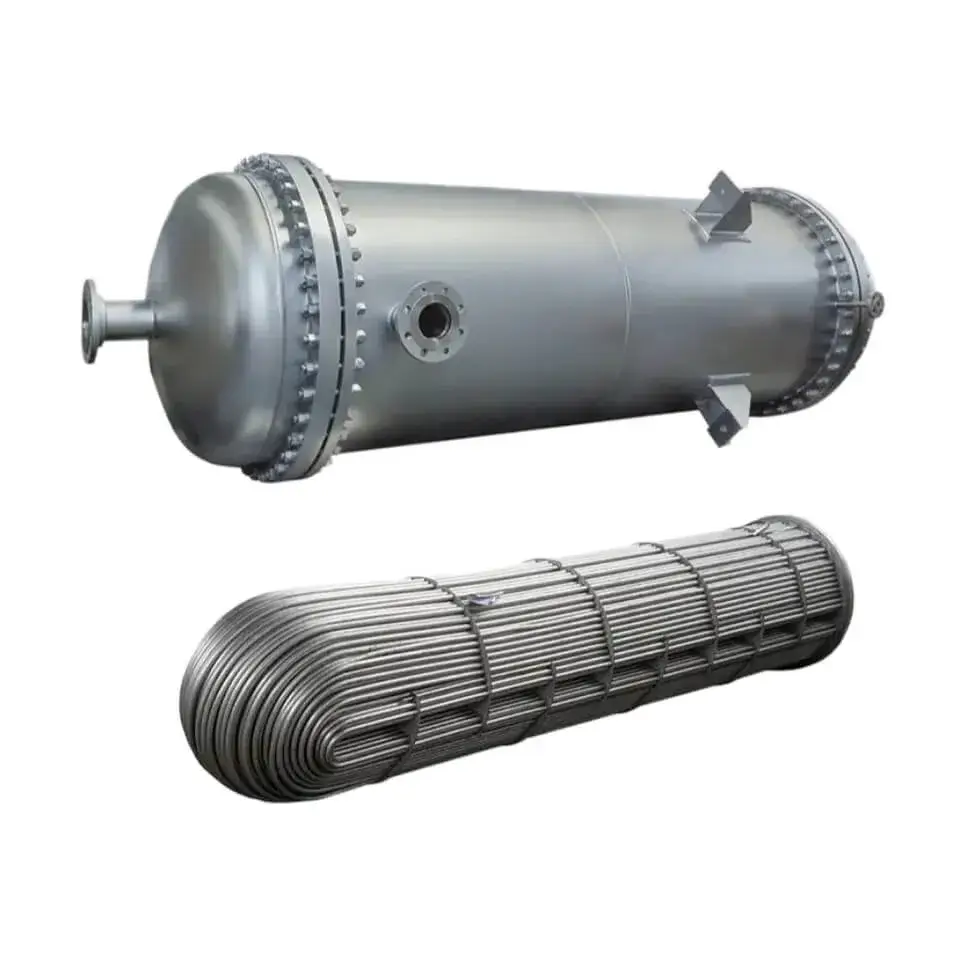
The Shell & Tube Heat Exchanger is a widely used heat transfer device in industrial applications. Its basic structure consists of a series of parallel tubes (called tube bundles) enclosed within an outer shell. Inside the exchanger, fluids at different temperatures exchange heat through the tube walls, enabling temperature regulation. Known for their efficiency, reliability, and adaptability, shell & tube heat exchangers are extensively used in chemical, petroleum, power generation, refrigeration, and food processing industries.
| Component | Specifications |
|---|---|
| Tube Materials & Specifications |
|
| Shell Design |
|
| Heat Transfer Area | Can reach hundreds of square meters or more for large exchangers |
| Pressure & Temperature Range |
|
| Efficiency & Heat Transfer Coefficient |
|
Shell & tube heat exchangers are widely used across multiple industries due to their efficiency, flexibility, and reliability:
Used for preheating, cooling, evaporation, and condensation processes. For example, in ammonia synthesis, they cool reaction gases while recovering heat.
Essential for crude oil heating, cooling, distillation, and deacidification processes in refineries.
Used in thermal and nuclear plants for cooling circulating water, condensing steam, and treating boiler feed water.
Key components in condensers, evaporators, and recuperators for refrigerant circulation and temperature control.
Critical for heating, cooling, and pasteurization processes in dairy and juice production.
Used in drug synthesis, purification, and packaging, requiring high hygiene standards and precise temperature control.
Proper maintenance ensures long-term stable operation of shell & tube heat exchangers:
Check tubes, shells, and connections for leaks, corrosion, or blockages. Clean internally using chemical, mechanical, or hydraulic methods as needed.
Conduct regular pressure tests to verify design specifications. Calibrate temperature and pressure gauges for accurate measurements.
Lubricate moving parts regularly. Apply appropriate anti-corrosion treatments like painting, rubber lining, or electroplating.
Promptly replace or repair worn, corroded, or damaged components following original design specifications.
Maintain detailed records of operation, maintenance history, and repairs. Regularly analyze performance data to identify potential issues.
Provide regular training for operators on exchanger structure, principles, and procedures. Employ qualified technicians for maintenance and troubleshooting.
Follow safety protocols and environmental regulations when handling waste fluids, gases, and residues from maintenance activities.
Through proper maintenance, shell & tube heat exchangers can deliver long-term stable operation and optimal heat transfer performance while extending service life and reducing repair costs.
As efficient, flexible, and reliable heat transfer devices, shell & tube heat exchangers from Fete Vessel provide exceptional value across numerous industrial applications when properly designed and maintained.



| Supply Scope: | Confirmed for the project in the quotation and contract | Design Requirements: | Confirmed for the project in the quotation and contract |
|---|---|---|---|
| Warranty: | Confirmed per quotation and contract | Inspection Scope: | Confirmed for the project in the quotation and contract |
What are your strengths?
Ans. We compare the submitted model, drawings, dimensions and operating conditions before defining a quotation scope.
What is your estimated delivery time?
Ans. The delivery schedule depends on the approved specification, materials and inspection scope and is confirmed in the quotation and contract.
What are your primary product offerings?
Ans. Our primary product offerings include industrial heat exchangers, pressure vessel, air dryer.
How can I get in touch with you?
Ans. Use the contact form or the published email and messaging channels to send your project details. Response timing is not guaranteed until it is confirmed for the enquiry.
What are your payment terms?
Ans. Payment method, deposit, balance, currency and any platform service are confirmed in the quotation and contract for each order.
Feel free to Ask questions
Share the equipment model and serial number, existing identification, dimensions or drawings, operating pressure, temperatures, media and old-part photos. Compatibility, materials, inspection and supply scope are confirmed only in the quotation, approved drawing and contract.
Dimensions and interfaces
We review submitted dimensions, interfaces and mounting details, drawings, old-part photos and site constraints.
Materials and project requirements
Material, inspection, documentation, coating, packing and delivery requirements are reviewed against the approved project scope.
Maintenance scope review
For maintenance projects, send the equipment identification, existing drawing, dimensions and photos so the required scope can be reviewed.


We have collaborated with many well-known enterprises, contributing to their success and establishing a strong reputation as a trusted partner in the industry.