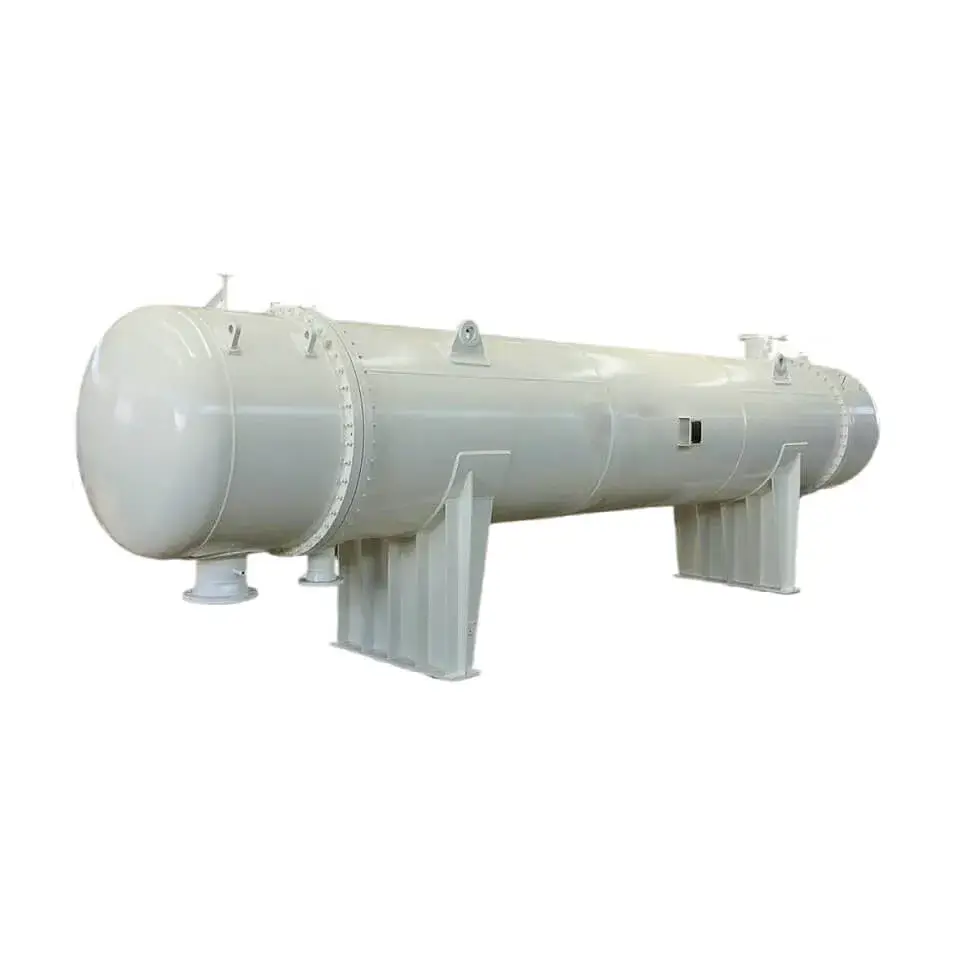
Heat Exchanger

Fete Vessel's fin tube heat exchangers represent advanced thermal technology for industrial applications, delivering superior heat transfer performance.
The fin tube heat exchanger is a highly efficient and widely used heat transfer device that enhances thermal exchange efficiency by increasing heat transfer area and improving fluid flow characteristics. Below is a comprehensive introduction to fin tube heat exchangers, including their features (presented with data), application scenarios, and maintenance methods.
| Feature | Performance Data |
|---|---|
| High Heat Transfer Efficiency | Heat-transfer performance is sized from duty data and the selected calculation or test basis. |
| Enhanced Surface Area | Required heat-transfer area and fin geometry are set from the thermal duty and selected drawing. |
| Fluid Dynamics | Optimized fin design reduces turbulence and pressure loss |
| Structural Strength | Pressure limit and installation envelope are set for the selected design. |
| Material Options | Stainless steel, copper, or aluminum selection is matched to the media and corrosion conditions. |
| Energy Savings | Significant reduction in energy consumption and operational costs |
The fin tube configuration dramatically increases heat transfer surface area while optimized fin shapes and arrangements further improve thermal efficiency and reduce thermal resistance.
Fin designs guide fluid along tube walls for uniform flow distribution, minimizing turbulence and vortex formation. This creates more uniform velocity distribution in fin channels, particularly beneficial for high-viscosity fluids like petroleum and chemical materials.
Fin tube exchangers offer exceptional space efficiency with their compact design. Constructed from high-strength materials, they withstand extreme pressures and temperatures in demanding industrial environments.
Fete Vessel's exchangers feature customizable configurations for specific operational requirements. Multiple material options and accessible fin designs simplify maintenance and extend service life.
The high efficiency translates to substantial energy savings and lower operating costs. Environmentally friendly materials and manufacturing processes complement the high waste heat recovery rates, supporting sustainable energy utilization.
Fin tube heat exchangers are widely used across multiple industries due to their efficiency, compactness and adaptability. Key applications include:
Essential for heating, cooling, evaporation and condensation processes in chemical production. Specially designed versions handle corrosive, viscous or flammable materials like sulfuric acid, hydrochloric acid and petroleum derivatives.
Critical components in thermal power plants for boiler feedwater heating and flue gas heat recovery. Fete Vessel's solutions enhance thermal efficiency while meeting stringent safety requirements in high-temperature, high-pressure environments.
Serving as condensers and evaporators in cooling systems, these exchangers improve refrigeration efficiency while reducing refrigerant usage. Applications span residential AC, commercial HVAC and cold chain logistics.
Used in heating, cooling and pasteurization processes for liquid foods including milk, juices and beers. Fete Vessel designs meet strict hygiene standards while improving production efficiency.
Integrated into engine cooling systems, vehicle AC units and battery thermal management for all vehicle types - conventional, electric and hybrid models.
Proper maintenance ensures long-term reliability and optimal performance of fin tube heat exchangers. Fete Vessel recommends these maintenance practices:
Implement scheduled inspections of internal and external components. Cleaning procedures should match operating conditions - options include high-pressure water jets, chemical cleaning or mechanical methods, always protecting fin surfaces.
Select appropriate anti-corrosion measures based on media properties. Water quality monitoring and pretreatment prevents scaling. Regular descaling maintains efficiency in scaling-prone applications.
Maintain temperatures and pressures within design specifications. Avoid exceeding rated parameters which can compromise equipment integrity.
Regularly check and replace gaskets and fasteners using manufacturer-approved parts installed according to specifications.
Maintain detailed service records including maintenance dates, procedures and replaced components. This historical data helps identify potential issues and optimize maintenance schedules.
Fete Vessel recommends comprehensive training programs covering operational principles, proper procedures and maintenance requirements to ensure safe, efficient operation.
Fete Vessel's fin tube heat exchangers deliver efficient, compact thermal solutions for diverse industrial applications. Through proper maintenance and operation, these systems provide reliable, long-term performance. Contact Fete Vessel today to discuss your specific heat exchange requirements.



| Supply Scope: | Confirmed for the project in the quotation and contract | Design Requirements: | Confirmed for the project in the quotation and contract |
|---|---|---|---|
| Warranty: | Confirmed per quotation and contract | Inspection Scope: | Confirmed for the project in the quotation and contract |
What are your strengths?
Ans. We compare the submitted model, drawings, dimensions and operating conditions before defining a quotation scope.
What is your estimated delivery time?
Ans. The delivery schedule depends on the approved specification, materials and inspection scope and is confirmed in the quotation and contract.
What are your primary product offerings?
Ans. Our primary product offerings include industrial heat exchangers, pressure vessel, air dryer.
How can I get in touch with you?
Ans. Use the contact form or the published email and messaging channels to send your project details. Response timing varies by enquiry and project scope.
What are your payment terms?
Ans. Payment method, deposit, balance, currency and any platform service are confirmed in the quotation and contract for each order.
Feel free to Ask questions
Share the existing heat-exchanger drawing or nameplate, dimensions, connections, process media, duty, temperatures, pressure limits and installation details, and our team will compare the requirements before proposing a manufacturing plan.
Dimensions and interfaces
We review heat-exchanger dimensions, connection locations, mounting, drawings, existing-unit photos and site installation details.
Materials and project requirements
Material, inspection, documentation, coating, packing and delivery requirements are reviewed against the approved project scope.
Maintenance scope review
For urgent maintenance projects, we can help assess whether an existing heat exchanger can be repaired, retubed or replaced.

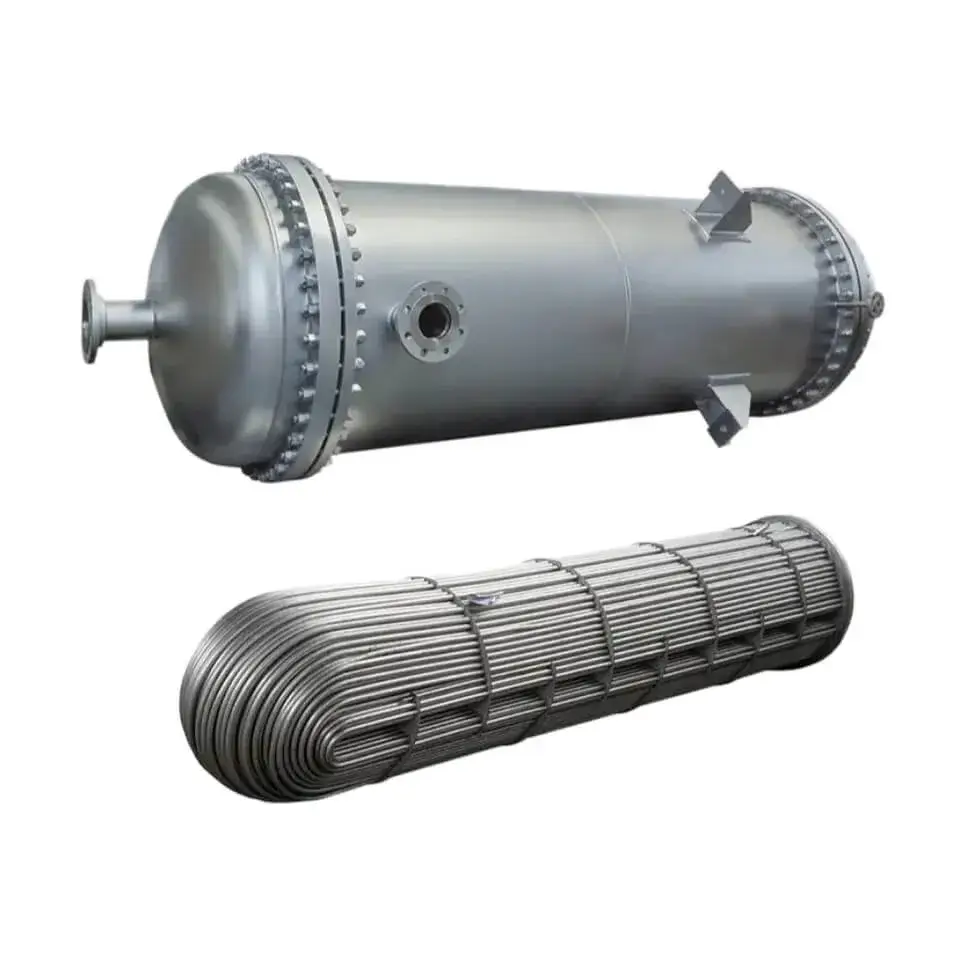

We have collaborated with many well-known enterprises, contributing to their success and establishing a strong reputation as a trusted partner in the industry.