Tech March 18, 2025

Air Compressor Cooling Water Process Overview and Future Trends

Air-Compressor-Cooling-Water-Process-Overview-and-Future-Trends

Introduction

Overview

The cooling water process is a critical component of air compressor operation. Air compressors generate significant heat during operation, and without proper cooling, the equipment can overheat, leading to damage and reduced efficiency. This article explores the role of cooling water, its process, and future advancements in cooling technology.

Article Structure

This article is divided into three main sections:

  • Introduction: Overview of the cooling water process and its importance.
  • Main Content: Detailed discussion of the cooling water's role and process.
  • Conclusion: Summary of the cooling water's significance and future trends.

Purpose

The purpose of this article is to highlight the importance of the cooling water process in air compressors, explain its workflow, and explore future advancements in cooling technology.


Main Content

Role of Cooling Water in Air Compressors

Cooling water plays a vital role in maintaining the optimal temperature of air compressors. Its primary functions include:

  • Heat Absorption: Cooling water absorbs heat generated during compression, preventing overheating and ensuring stable operation.
  • Lubrication: It reduces friction between mechanical components, minimizing wear and tear.
  • Cleaning: The circulating water removes dust and impurities, keeping the system clean.

These functions ensure efficient operation, extend equipment lifespan, and maintain system cleanliness.

Cooling Water Process

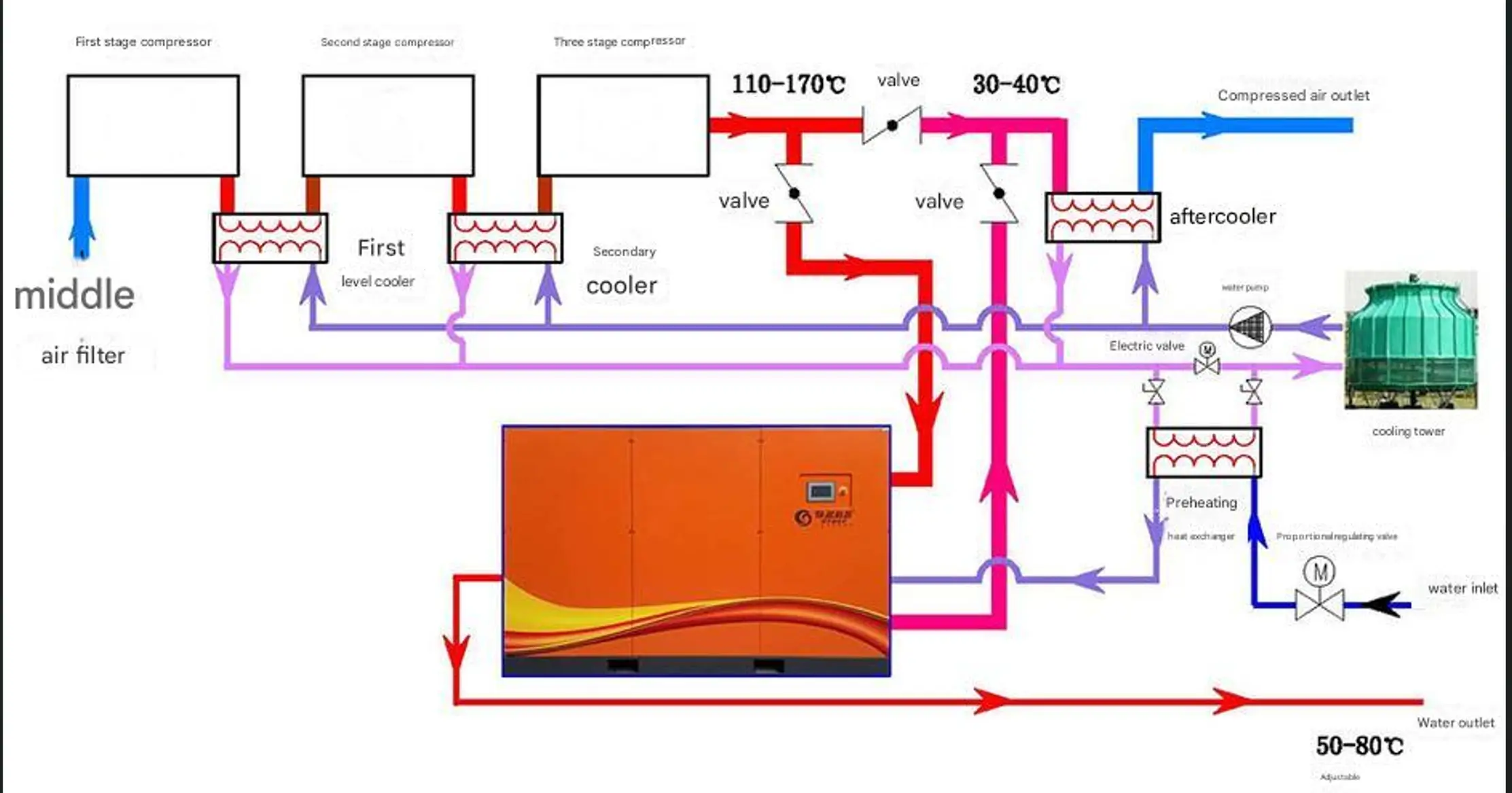
The cooling water process involves several key steps:

  1. Water Supply: Cooling water is supplied to the air compressor system through pipelines or pumps.
  2. Heat Exchange: The water absorbs heat from the compressor in the cooling unit, lowering the system's temperature.
  3. Heat Dissipation: The heated water is either discharged or recirculated after cooling, depending on the system design.

This process ensures that the air compressor operates within safe temperature limits, enhancing efficiency and reliability.

Conclusion

Importance of Cooling Water

Cooling water is essential for maintaining the temperature, reducing noise, and improving the efficiency of air compressors. Proper management of the cooling water process ensures stable operation, extends equipment lifespan, and reduces energy consumption.

Future Trends in Cooling Water Processes

Future advancements in cooling water technology may include:

  • Smart Control Systems: Real-time monitoring and adjustment of cooling water parameters using sensors and data analytics.
  • Eco-Friendly Solutions: Adoption of environmentally friendly cooling agents and renewable energy sources.
  • Energy Efficiency: Optimization of cooling water flow and pressure to reduce energy consumption.
  • Automated Maintenance: Use of IoT and remote monitoring for predictive maintenance and fault detection.

These innovations will enhance the efficiency, sustainability, and reliability of air compressor cooling systems.

Share Article

Get stories direct to your inbox

We’ll never share your details. View our Privacy Policy for more info.